
Tampa, FL, March 31st, 2026–Written by Nick Cannella
If you own land in Florida, especially near major roadways or growing industrial corridors, there is a good chance your property may be more valuable than you think.
And one of the biggest reasons why is something many landowners have never heard of.
Industrial Outdoor Storage, commonly referred to as IOS.
Over the past several years, IOS has quietly become one of the fastest-growing segments in commercial real estate. What was once considered a secondary or overlooked use is now being actively pursued by investors, developers, and operators across Florida.
So what exactly is IOS, and why is it creating so much opportunity for landowners?
Let’s take a closer look.
What Is Industrial Outdoor Storage (IOS)?
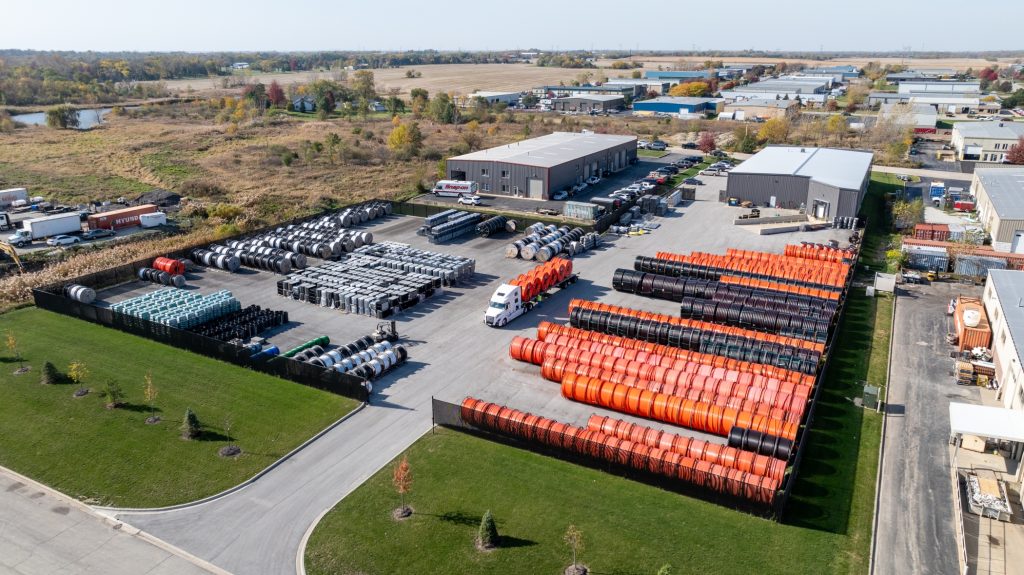
Industrial Outdoor Storage refers to properties that are primarily used for storing equipment, vehicles, materials, or inventory outdoors, often with minimal building improvements.
Keeping tabs on what the market’s practitioners are reading is a useful signal in itself. The Dirt Dogs’ April Pick 3 shares three standout pieces that had the team’s attention that month—a curated shortlist of market intelligence for Florida land buyers, sellers, and investors who want a fast read on what’s worth following.
Industrial outdoor storage is one niche use gaining traction—but it’s not the only alternative commercial development type reshaping how Florida land gets absorbed. Our look at car wash and self-storage development examines two other niche sectors that surged in recent years and how they’re adjusting as capital costs and market saturation have introduced new headwinds.
Typical IOS uses include:
- Contractor yards
- Truck parking and fleet storage
- Construction equipment storage
- RV and boat storage
- Landscaping and utility company yards
- Building material storage
These sites are often simple in design but highly functional. Most include:
- Stabilized or paved surfaces
- Perimeter fencing and security
- Basic office or warehouse structures
- Access for large vehicles and trailers
The key is usability, not complexity.
Why IOS Is Growing So Quickly in Florida
Population Growth and Construction Demand
Florida continues to experience strong population growth, particularly in regions like Tampa, Orlando, and Southwest Florida.
Every member of the Eshenbaugh Land Company team brings a distinct perspective to land brokerage. The Dirt Dogs’ interview with Vaike O’Grady is a quick read that illuminates her background and why she joined the firm—useful context for sellers deciding who to trust with a significant asset.
Understanding who’s behind a firm’s results adds important context to the numbers. The Dirt Dogs’ profile of Chase Collier gives readers an inside look at one of the team’s active brokers—his market knowledge, his deal philosophy, and the experience he brings to land transactions across the Suncoast and beyond.
The IOS sector has been a consistent topic at Florida industrial real estate panels, where brokers and investors are tracking absorption, rental rates, and new supply. Our recap of the SOREP industrial market update panel covers the key takeaways for anyone tracking this space.
With that growth comes increased demand for:
- Construction services
- Infrastructure development
- Utility expansion
- Transportation and logistics
All of these industries require space to store equipment and materials.
That space is IOS.
Limited Supply of Usable Industrial Land
Unlike traditional industrial development, IOS sites do not require large buildings. However, they still require specific characteristics:
- Appropriate zoning
- Good access to major roads
- Usable land with minimal environmental constraints
- Proximity to population centers
As more land gets developed or restricted, the supply of suitable IOS sites becomes limited.
Limited supply leads to increased demand and higher pricing.
E-Commerce and Logistics Expansion
The continued growth of e-commerce has driven demand for distribution and logistics infrastructure.
While warehouses get most of the attention, IOS plays a critical supporting role.
Companies need space for:
- Trailer storage
- Fleet parking
- Overflow inventory
- Equipment staging
IOS sites help solve these problems.
Lower Development Costs Compared to Traditional Industrial
One of the reasons IOS has gained traction is that it is relatively simple to develop compared to other asset types.
There is no need for:
- Large vertical construction
- Extensive building systems
- Complex tenant improvements
This allows investors to move quickly and generate returns with less upfront capital.
What Makes a Property Suitable for IOS?
Not every piece of land works for IOS.
However, if your property has the following characteristics, it may be a strong candidate.
1. Industrial or Compatible Zoning
Zoning is one of the most important factors.
Typical zoning categories that support IOS include:
- Industrial (I-1, I-2)
- Light Industrial
- Certain Planned Developments (PD)
- In some cases, commercial zoning with outdoor storage allowances
If your property is not currently zoned for industrial use, there may still be potential depending on the surrounding area and future land use designation.
2. Proximity to Major Roadways
Access is critical for IOS users.
Properties near:
- Interstate 75
- Interstate 4
- U.S. Highway 301
- State Road 52
- Major arterials
are especially attractive.
Users need to move trucks, equipment, and materials efficiently.
3. Usable Land
Not all acreage is equal.
Developers look for:
- Dry land
- Minimal wetlands
- Good topography
- Adequate drainage
A smaller usable site can often be more valuable than a larger property with significant constraints.
4. Ability to Support Heavy Traffic
IOS sites must be able to handle:
- Trucks
- Trailers
- Heavy equipment
This includes considerations like:
- Soil conditions
- Road access
- Turning radius
How IOS Impacts Land Value
For landowners, IOS can significantly change how your property is valued.
Increased Buyer Pool
IOS opens your property to a new category of buyers, including:
- Private investors
- Industrial operators
- National IOS funds
- Local business owners
More buyers typically means more competition.
Higher Demand for Smaller Parcels
Unlike large-scale industrial development, IOS can work on smaller sites.
Properties between 1 and 10 acres are often highly desirable.
This is important because many landowners fall within this size range.
Faster Development Timelines
Because IOS sites are simpler to develop, buyers may be willing to move more quickly.
Shorter timelines can translate to stronger offers and faster closings.
Income Potential
In some cases, IOS properties are held as income-producing assets.
Lease structures may include:
- Monthly equipment storage
- Fleet parking agreements
- Contractor yard leases
This can create long-term value for investors.
Common Misconceptions About IOS
“It’s Just Low-Value Storage”
In reality, IOS has become a highly sought-after asset class.
Institutional investors are actively acquiring IOS properties due to strong demand and limited supply.
“My Land Is Too Small”
Smaller sites can actually be ideal for IOS.
Location and usability often matter more than size.
“It Won’t Work Without a Building”
Many IOS sites function with minimal or no buildings.
In fact, outdoor space is often the primary driver of value.
Where IOS Is Expanding in Florida
We are seeing increased IOS activity across several key regions:
- Tampa Bay and Pasco County
- Riverview and South Hillsborough
- Orlando and surrounding suburbs
- Lakeland and the I-4 corridor
- Southwest Florida markets
These areas combine strong population growth, industrial demand, and expanding infrastructure.
Risks and Considerations
While IOS presents strong opportunities, there are still factors to consider.
Zoning Restrictions
Not all jurisdictions allow outdoor storage, or they may impose limitations on:
- Screening
- Setbacks
- Noise
- Hours of operation
Community Perception
In some areas, IOS may face opposition due to aesthetics or traffic concerns.
Proper planning and positioning are important.
Environmental Constraints
Wetlands, flood zones, and soil conditions can impact site usability.
How to Know If Your Land Is a Good Fit
If you own land in Florida and are unsure whether it could work for IOS, consider the following:
- Is your property near a major roadway?
- Does it have industrial or flexible zoning?
- Is the land mostly usable?
- Are there nearby industrial or commercial users?
If the answer to several of these is yes, your property may have strong IOS potential.
Final Thoughts
Industrial Outdoor Storage is no longer a niche concept.
It is a growing, in-demand asset class that is reshaping how certain types of land are valued and used across Florida.
For landowners, this creates an opportunity.
An opportunity to position your property differently.
An opportunity to attract new types of buyers.
And in many cases, an opportunity to achieve stronger pricing.
Considering Selling Your Land?
If you believe your property may be suitable for Industrial Outdoor Storage, it may be worth taking a closer look before making any decisions.
Industrial Outdoor Storage is one of the standout land use trends reshaping the Florida market right now—alongside agricultural conversion, solar development, and mixed-use rezoning. For a broader picture of how land use is shifting across the state, our overview of 2025 Florida land use trends puts IOS in context alongside the other major forces at play.
For a broader look at how the industrial sector is performing across Tampa Bay, our Tampa industrial real estate market outlook covers demand drivers, vacancy trends, and what the pipeline looks like for landowners with industrial-suitable sites.
At Eshenbaugh Land Company, we work with landowners across Florida to evaluate opportunities, identify potential buyers, and position properties to maximize value.
Call 813-287-8787 or visit www.thedirtdog.com to learn more.