
Tampa, FL — October 29, 2026 — Written by Nick Cannella
A perc test in Florida measures how quickly soil absorbs water, which determines whether rural land can support a septic system. Because most rural Florida parcels rely on septic rather than municipal sewer, soil suitability directly affects whether — and where — a home can be built, making it one of the most important due-diligence items for buyers and sellers of rural land.
If you own or are eyeing acreage without access to public sewer, the ground itself decides a lot about the property’s value and buildability. Understanding perc tests, soil evaluations, and septic requirements up front prevents expensive surprises later.
What is a perc test?
A perc test — short for percolation test — measures the rate at which water drains through soil. A hole is dug, saturated with water, and the drop in water level is timed. The result (the ‘percolation rate’) tells engineers and regulators whether the soil can absorb and filter the effluent from a septic system’s drainfield. Soil that drains too slowly (like heavy clay) or too fast (like pure sand) can each create problems for a conventional system.
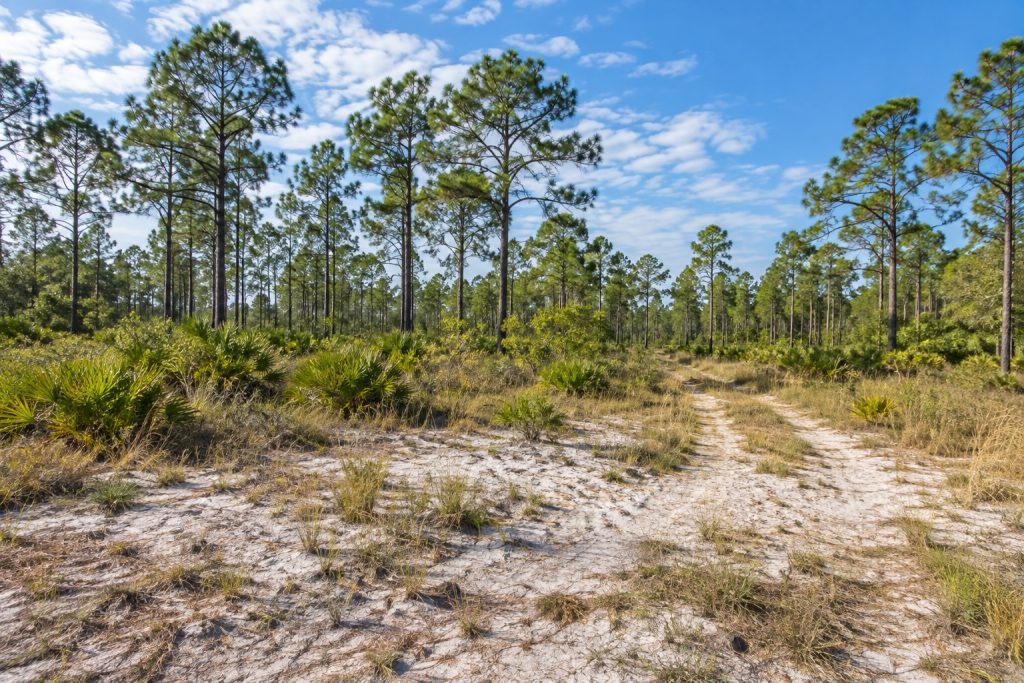
In Florida, the picture is a little different from other states. Because so much of the state has sandy soils and a high water table, the state relies heavily on a soil and site evaluation — examining soil types, the seasonal high water table, and topography — rather than a traditional timed perc test alone. In practice, landowners still use ‘perc test’ as shorthand for this soil suitability evaluation.
Why soil matters so much for rural Florida land
On rural land without public sewer, a septic system is the only option — and a septic system only works if the soil can handle it. That makes soil the gatekeeper for development:
- No suitable soil, no conventional septic — and without septic, you cannot get a residential building permit on most rural parcels.
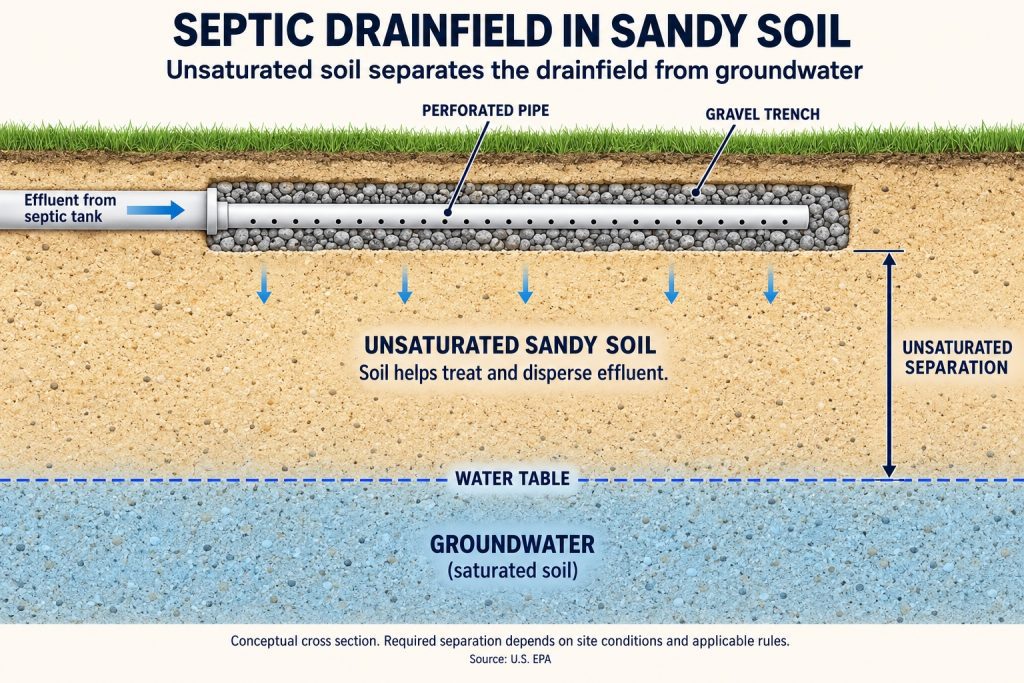
- Florida’s high water table means the drainfield must sit a required distance above the seasonal high water level, which can force a mounded or engineered system.
- Poor soil doesn’t always mean ‘unbuildable’ — but it can mean a more expensive engineered or performance-based system instead of a standard one.
This is why a soil evaluation is a core part of due diligence, right alongside a [ANCHOR: land survey → /land-survey-florida/] and a review of wetlands and flood zones.
Who regulates septic systems in Florida?
Onsite sewage treatment and disposal systems (OSTDS) — the technical name for septic systems — are permitted by either the Florida Department of Environmental Protection (DEP) or your county Department of Health, depending on the county. Florida is transitioning this program from the Department of Health to DEP in phases, so the permitting authority for your specific parcel depends on where it is located. Either way, a site and soil evaluation must be submitted before a septic permit is issued.
What the soil evaluation looks at
A qualified evaluator assesses several conditions that determine what kind of system the land can support:
- Soil type and texture — sand, loam, clay, or organic soils each drain differently.
- Seasonal high water table — how close groundwater rises during the wet season.
- Depth of usable soil — how much suitable soil sits above limiting layers.
- Topography and drainage — slope and how water moves across the site.
- Setbacks — required distances from wells, water bodies, wetlands, and property lines.
What a poor perc or soil result means
A less-than-ideal result rarely means the land is worthless — but it changes the math:
- Engineered or mound systems can make marginal soil work, at a higher cost.
- Performance-based treatment systems may be required near sensitive waters.
- Drainfield location may be limited to a specific part of the parcel, affecting where a home can go.
- Costs rise, which affects what a buyer will pay — and what a seller should expect.
For buyers, knowing this before closing is essential. For sellers, having a soil evaluation in hand removes uncertainty and keeps a deal from stalling in due diligence.
Perc tests, soil, and land value
Soil suitability feeds directly into value and marketability. Two similar-looking 10-acre rural parcels can be worth very different amounts if one supports a simple, low-cost septic system and the other requires an expensive engineered solution. Buyers price that risk in. That is why a soil evaluation belongs in the same conversation as zoning, access, and utilities when you are determining a rural parcel’s realistic value. How a Broker Opinion of Value weighs these factors.
Advice for buyers and sellers
If you are buying rural Florida land:
- Make your contract contingent on a satisfactory soil evaluation and septic feasibility.
- Confirm the seasonal high water table and setbacks before you close.
- Get a cost estimate for the type of system the soil will require.
If you are selling rural Florida land:
- Consider ordering a soil evaluation in advance so buyers see a clear path to building.
- Be transparent about known soil or water-table conditions.
- Position the property to the right buyer pool — some buyers are comfortable with engineered systems.
For official permitting information, see the state’s onsite sewage program. Florida DEP — Onsite Sewage Program
Own rural land and want to understand how its soil and buildability affect value? Request a confidential Broker Opinion of Value at /contact/.
This article is general information, not engineering or legal advice. Always rely on a qualified soil evaluator and your local permitting authority for your specific parcel.