
Tampa, FL, September 9th, 2026 — Written by Nick Cannella
Note: This is general educational information, not legal advice. Confirm any specific parcel’s mineral status with a title professional and a real estate attorney.
Do you own the mineral rights to your Florida land? The only way to know for certain is to trace your deed and the chain of title — because in Florida, the minerals beneath your property can be legally owned by someone else entirely, even when you hold the surface.
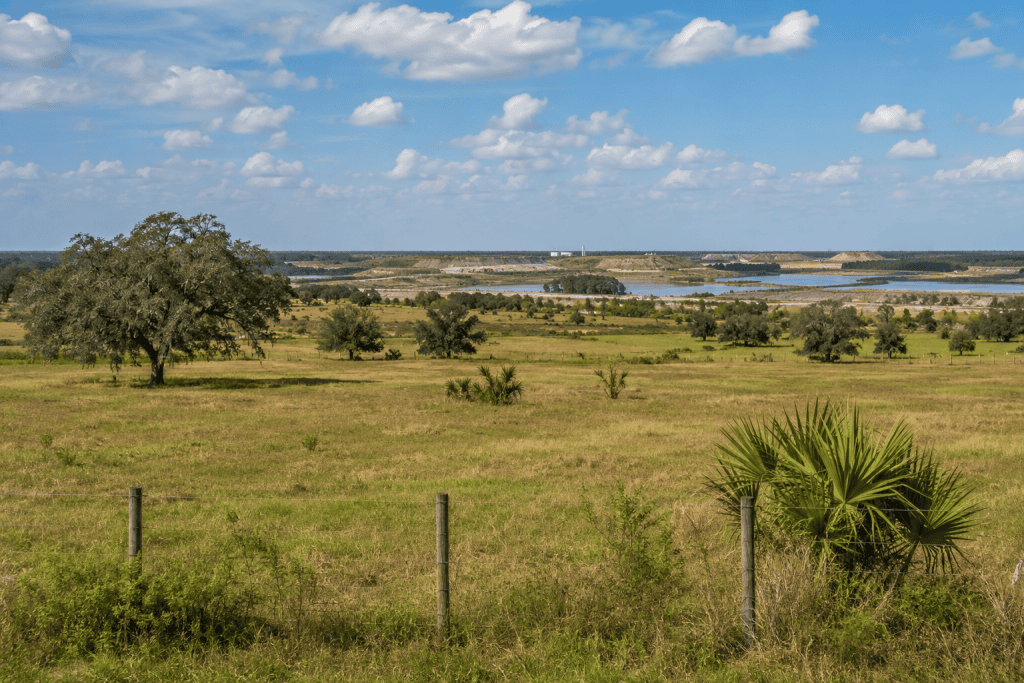
This surprises a lot of landowners. In our work across Central and Southwest Florida — phosphate country — mineral questions come up on more parcels than most owners expect. A tract can look completely clean above ground and still carry a decades-old mineral reservation buried in the record.
This post walks through how to find out whether you own the mineral rights to your Florida land, what it means if you do not, and what you can do about it.
Surface rights vs. mineral rights: the “bundle of rights”
Land ownership is best understood as a bundle of rights — and that bundle can be split apart.
Surface rights let you use the land itself: build, farm, graze, or develop. Mineral rights are the separate right to explore for and extract what lies beneath — in Florida, most often phosphate, limestone, sand, oil, or gas. When these are owned by different parties, lawyers call it a severed or split estate.
A severance usually happened long ago. A previous owner, a developer, or a phosphate-region seller reserved the minerals when they sold the surface, and that reservation has quietly passed down through the chain of title ever since. The current surface owner often has no idea it is there.
Why this matters so much in Florida
Florida is not a minor player in minerals. The “Bone Valley” region of Central Florida — spanning Polk, Hillsborough, Hardee, Manatee, and DeSoto counties — is one of the largest phosphate deposits in the world, and the state is a leading producer of phosphate rock.
That history is exactly why severed mineral rights are common here. Where minerals have real value, they were more likely to be reserved when land changed hands. If a third party owns the minerals under your land, they may hold a legal right to access the surface to extract them — which can affect how you use, develop, insure, and value your property.
How to find out if you own the mineral rights to your Florida land
Answering the question takes a few concrete steps. None of them rely on how the land looks — they all rely on the record.
- Read your deed.
Start with the deed that conveyed the property to you. Look for any language reserving or excepting “minerals,” “mineral rights,” “phosphate,” “oil and gas,” or a “right of entry.” A reservation in your own deed is the clearest sign the minerals were not conveyed with the surface. But the absence of language in your deed does not settle it — a severance further back in the chain still binds you.
- Order a title search — specifically for minerals.
A standard title search focused on marketable surface title may not flag a severed mineral interest. Ask the title company or a real estate attorney for a search that specifically examines mineral reservations in the chain of title. This is the single most reliable step.
- Check the county public records.
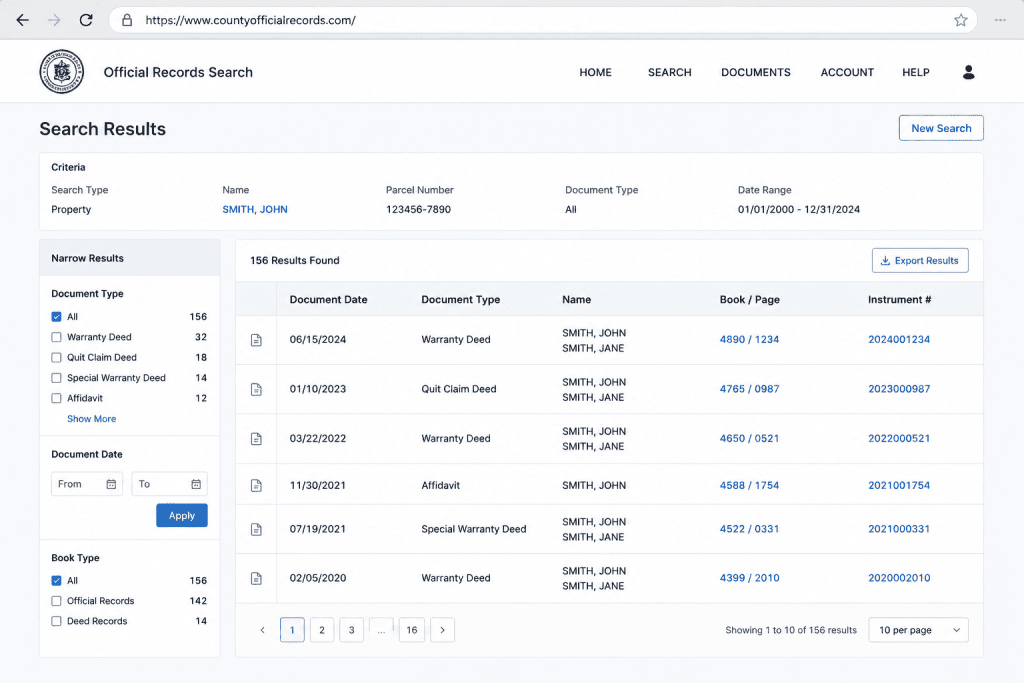
Mineral reservations are recorded with the county. The clerk of court’s official records and the property appraiser’s office can help you trace historical reservations, some dating back decades. County records are where the paper trail lives.
- Consult a professional.
A real estate attorney who handles mineral issues can read the chain of title, interpret old reservations, and tell you what rights — if any — a third party actually holds today. Given what is at stake, this is not a do-it-yourself exercise for most owners.
Two Florida laws that can work in your favor
Here is the part most landowners never hear: an old mineral reservation on the books does not automatically mean someone can still come mine your land today. Two Florida statutes can limit or extinguish dormant rights.
The Marketable Record Title Act (Chapter 712, Florida Statutes), enacted in 1963, limits title examination to a 30-year “root of title” and can extinguish older claims that were not properly preserved in the record. Under F.S. 704.05, a private right of entry reserved for mining, drilling, or exploring can be extinguished by the Act even where the underlying mineral reservation itself survives. In plain terms: a company might still “own” a paper mineral interest, yet have lost the legal right to enter and mine your surface because the right of entry was not preserved within the statutory window.
A second provision, F.S. 270.11(3), releases the state’s reserved right of entry for phosphate, minerals, metals, or petroleum on any parcel that is — or ever was — a contiguous tract of less than 20 acres under the same ownership. Many smaller Florida parcels qualify for this release.
Important caveats apply. Mineral and right-of-entry interests reserved by the State of Florida or the federal government are generally NOT extinguished by the Marketable Record Title Act. Whether the Act has cleared a particular reservation is a legal determination — which is exactly why a title professional needs to make the call on your specific parcel.
What to do if you do not own your mineral rights
Discovering a severed mineral interest is not necessarily a crisis — but it is something to address deliberately.
- Assess the real risk: Determine whether the right of entry is still alive, or whether MRTA or the 20-acre release may have extinguished it. This is the most important question, and it is a legal one.
- Consider buying them back: In some cases, mineral rights can be repurchased from the current holder — if they are willing to sell. Developers, conservation groups, and owners sometimes reacquire rights to remove the cloud and protect value.
- Price it into decisions: A severed mineral interest, or an active right of entry, can affect appraisal, financing, insurance, and development. Know how it factors into your land’s value.
This is closely tied to understanding how much your land is worth in Florida — a live right of entry can weigh on value, while an extinguished or released reservation may clear the way. It also belongs in every buyer’s due diligence checklist.
The bottom line for Florida landowners
You cannot tell whether you own the mineral rights to your Florida land by walking the property — you have to read the record.
For most owners, that means a mineral-specific title search and a conversation with a professional who can interpret what turns up. In phosphate country especially, it is worth knowing exactly what you own beneath the surface — before you sell, develop, or refinance.
If you have questions about the mineral rights to your Florida land, or how a severed interest affects a sale or purchase, our land advisory team can help you think it through. You can also view available land listings across Tampa Bay, Central Florida, and Southwest Florida.
Not sure who owns the minerals beneath your land? Contact Eshenbaugh Land Company for a confidential conversation before you buy, sell, or develop.