
Tampa, FL — October 27, 2026 — Written by Nick Cannella
Easements on Florida land are legal rights that let someone else use part of your property for a specific purpose — such as access, drainage, or utilities — without owning it. They can affect how you use your land, what you can build, and what your property is worth, so every landowner should know what easements exist on their parcel before buying, selling, or developing.
Easements are extremely common and often harmless, but they can also limit development, complicate a sale, or create disputes with neighbors. Understanding the main types and how they work puts you in control of your property.
What is an easement?
An easement is a right to use land that belongs to someone else for a defined purpose. The landowner still owns the property, but the easement holder has a legal right to use the specified area. Most easements on Florida land are recorded in the county records and ‘run with the land’ — meaning they stay in place when the property is sold.
Common types of easements on Florida land
Access (ingress/egress) easement
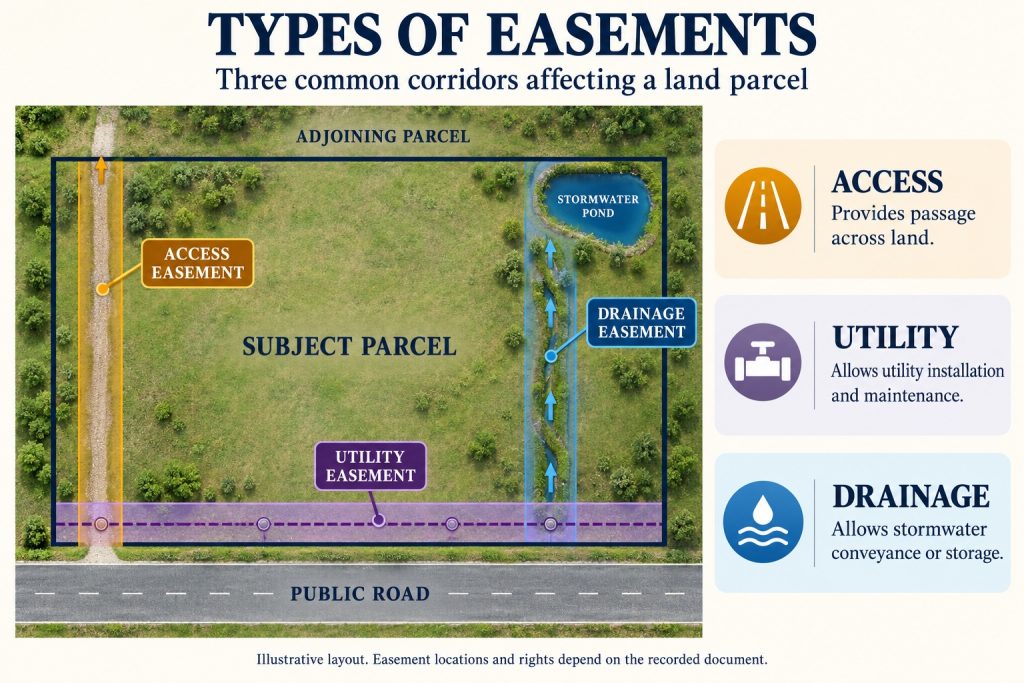
Gives someone the right to cross your property to reach their own — common where a ‘landlocked’ parcel needs to reach a public road across a neighbor’s land. These are among the most important easements to understand, because access can make or break a parcel’s usability and value.
Utility easement
Allows a utility company to install and maintain power lines, water, sewer, gas, or telecommunications across your land. Very common and usually along property edges, but they can restrict where you build.
Drainage easement
Gives a government or neighbor the right to direct or manage stormwater across a portion of your property. Important in flat, water-managed Florida landscapes and often tied to development permits.
Conservation easement
A voluntary, usually permanent restriction that limits development to protect natural resources, often in exchange for tax benefits. How conservation easements work in Florida.
Prescriptive easement
Can arise when someone uses part of your land openly and continuously for a long period without permission — a reason to address unauthorized use early rather than let it become a claimed right.
How easements affect land value and development
Easements can cut both ways. An access easement that gives your landlocked parcel a legal route to a road adds enormous value. A utility or drainage easement running through the buildable center of a parcel can reduce it by limiting where structures go. When you are buying or selling, easements are a core due-diligence item — and a current survey is the best way to see exactly where they sit.
How to find out what easements exist
Before you buy, sell, or develop, identify every easement on the property:
- Order a title search — a title company or attorney will pull recorded easements.
- Get a current survey — a boundary or ALTA survey plots easements on the ground.
- Review the deed and county records — recorded easements appear in the chain of title.
- Check with utilities and local government — some drainage and utility rights may not be obvious.
Easement disputes and how to avoid them
Disputes usually arise over the scope of an easement (how much can be used, and for what), maintenance responsibility, or unauthorized expansion of use. Clear, recorded, well-drafted easement language prevents most problems. If you are creating or modifying an easement — for example, granting access to a neighbor or a buyer — have a Florida real estate attorney draft it.
Know your easements before you sell
For sellers, surprises kill deals. Knowing exactly what easements affect your land — and being able to explain how they impact use and value — lets you market the property with confidence and keep a sale on track. A land broker experienced with Florida parcels can help you understand how your easements affect the buyer pool and pricing.
For general information on Florida real property rights, see The Florida Bar.
Wondering how the easements on your land affect its value and sale? Contact Eshenbaugh Land Company at https://www.thedirtdog.com/contact/ a market-based assessment.
This article is general information, not legal advice. Consult a Florida real estate attorney about specific easement questions.