

Tampa, FL, August 7th, 2026–Written by Nick Cannella
Note: This is general educational information, not tax or legal advice. Always confirm requirements with your county property appraiser and a qualified professional.
The Florida Greenbelt Law lets land used for bona fide commercial agriculture be taxed on its agricultural use value rather than its full market value — often cutting a landowner’s property tax bill dramatically.
Officially known as Florida Statute 193.461, it is one of the most valuable — and most misunderstood — tools available to Florida landowners. In our work with agricultural landowners across Central and Southwest Florida, it comes up in nearly every conversation about holding, valuing, or selling working land.
This post explains how the law works, who qualifies, and how agricultural classification affects what your land is worth.
What is the Florida Greenbelt Law?
The Florida Greenbelt Law was enacted in 1959 to protect farmers from being forced to sell their land because of rising taxes.
The logic is simple. As cities grow, surrounding farmland becomes more valuable for houses and shopping centers. As that market value rises, so do property taxes. A farmer with 100 acres of pasture cannot afford to pay residential tax rates on land that only grows hay or grazes cattle. The law solves this by allowing qualifying land to be taxed based on its agricultural use, not its development potential.
Classification, not exemption — why the difference matters
This is the single most important distinction to understand: agricultural classification is not an exemption.
An exemption, like Homestead, knocks a flat amount off your assessed value. A classification changes the entire way the county calculates your land’s worth from the ground up — valuing it on use rather than market. That difference usually produces far larger savings than any standard exemption.
The gap can be substantial. A parcel a county values at hundreds of thousands of dollars based on development potential may be assessed at a small fraction of that under agricultural use value.
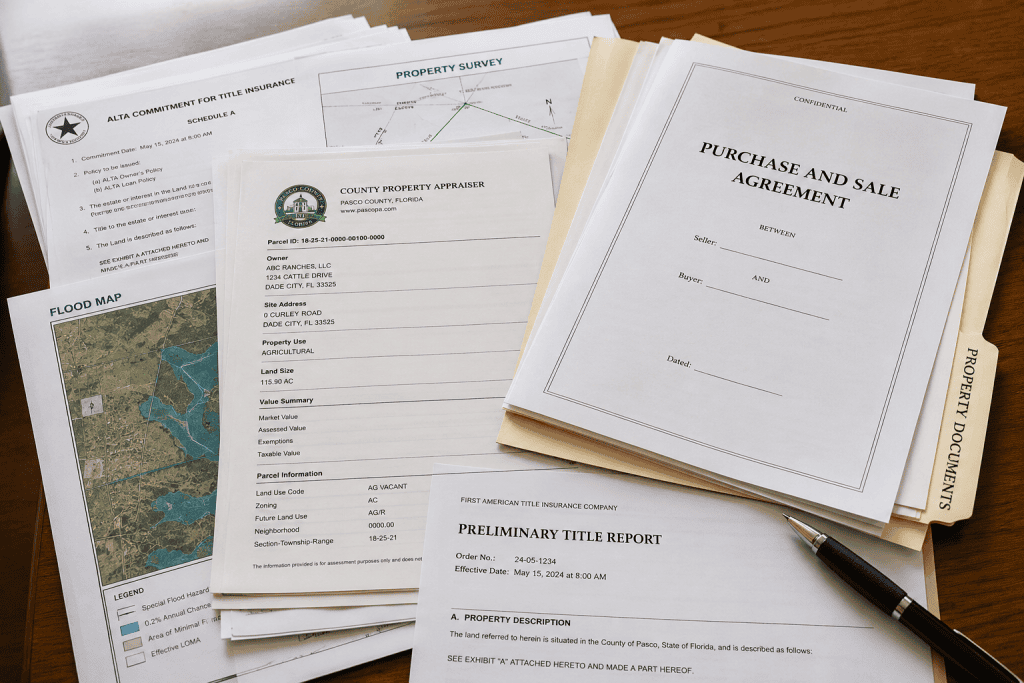
Who qualifies for agricultural classification?
The statute is specific: only lands used primarily for bona fide agricultural purposes qualify. The law defines “bona fide agricultural purposes” as a good-faith commercial agricultural use of the land.
That word — commercial — is where many owners stumble. Putting a single cow on a parcel and calling it a farm will not withstand scrutiny. County appraisers look for a genuine commercial effort. In evaluating an application, a property appraiser may consider:
- Whether the land is managed in accordance with accepted commercial agricultural practices.
- The length of time the land has been so managed.
- The size of the parcel relative to the agricultural use.
- The purchase price paid for the land.
- Supporting documentation, such as a farm business plan, and a physical inspection of the property.
Qualifying uses are varied — cattle grazing, row crops, timber, citrus, aquaculture, and more. Each county sets its own guidelines, including density expectations such as head of livestock per acre, so requirements are best confirmed directly with your county property appraiser.
The March 1 deadline you cannot miss
Timing is strict. An application for agricultural classification must be filed with the county property appraiser on or before March 1 of each year.
Classification is based on the property’s use as of January 1. Missing the March 1 deadline constitutes a waiver of the agricultural assessment for that year. After the initial application, many counties allow reapplication on a short form or renew the classification automatically as long as ownership and use have not changed.
If an application is denied, the property appraiser must notify the owner in writing on or before July 1, and the owner has the right to appeal to the county’s value adjustment board.
How the Greenbelt affects land value and sales
Agricultural classification cuts holding costs — but it also interacts with a land sale in ways sellers should understand.
When classified land is sold and the use changes, the classification is removed and the property is reassessed at market value. In some cases, a change in use can trigger back taxes. A buyer planning to develop the land needs to understand that the low agricultural tax bill will not survive the transition.
For sellers, the classification is often a selling point to another agricultural buyer and a holding advantage while the land is marketed. Understanding the difference between raw and entitled land matters here, because a parcel’s agricultural classification and its development potential tell two different stories about the same piece of ground.
What landowners should do
If you own agricultural land in Florida, three practical steps apply.
First, confirm your current classification status and calendar the March 1 deadline. Second, keep documentation of genuine commercial agricultural use — the appraiser will want evidence, not intentions. Third, if you are considering a sale, understand how removal of the classification and potential back taxes factor into the transaction.
These decisions are best made with your county property appraiser, a tax professional, and a land advisor who understands how the Florida Greenbelt Law interacts with the market. Our land advisory team works with agricultural landowners across Florida on exactly these situations. You can also view available agricultural land.
Questions about how agricultural classification affects your land’s value or a potential sale? Contact Eshenbaugh Land Company for a confidential conversation.