
Tampa, FL, July 20th, 2026–Written by Nick Cannella
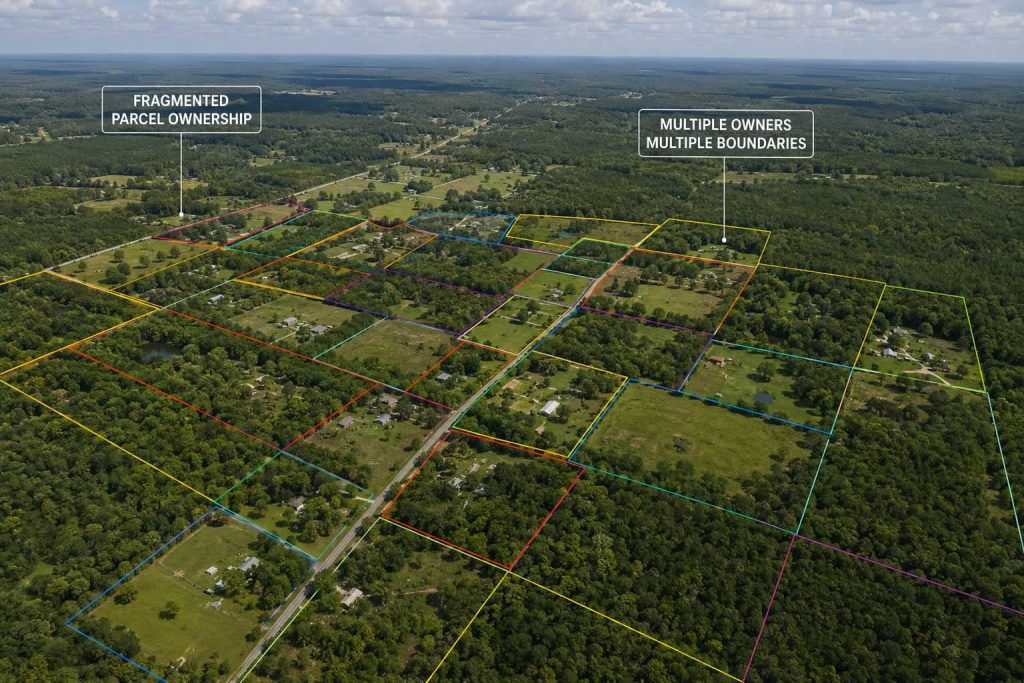
Most of Florida’s highest-value development projects don’t start with a single, perfectly sized parcel waiting to be purchased. They start with fragmented land — multiple smaller parcels under different owners — that a developer assembles into a viable development site. This process is called land assemblage, and understanding how it works matters whether you are a developer looking to build or a landowner who may one day receive an offer from one.
What Is Land Assemblage?
Land assemblage is the process of combining multiple adjacent or nearby parcels into a single, larger tract for development purposes. A developer identifies a location where a project makes economic sense, maps out the parcels required to achieve the necessary size and configuration, and systematically acquires each one — either through negotiation, option agreements, or some combination of both.
The goal is to create a site that could not exist through the purchase of any single parcel: a tract large enough to support a meaningful development footprint, with contiguous boundaries that eliminate gaps and provide clean access. In Florida’s active growth corridors, where many desirable locations are divided among multiple long-term owners, assemblage is how major development sites get created.
Why Assemblage Is Common in Florida
Florida’s land ownership patterns make assemblage both common and complex. Decades of agricultural subdivision, family estate division, and piecemeal platting have left many high-demand corridors chopped into fragmented ownership. A developer looking at a 50-acre site in a desirable location might find it divided among five, ten, or even twenty different owners — each with different motivations, timelines, and price expectations.
The state’s rapid growth has accelerated this dynamic. As Florida’s population has expanded and development pressure has pushed into previously rural areas, developers have increasingly needed to assemble sites in corridors where the ownership picture was never designed with large-scale development in mind.
How the Assemblage Process Works
A typical assemblage follows a recognizable sequence, though the specifics vary by deal and location.
- Site identification: The developer (or their broker) identifies a target area where the market supports a specific development program — a residential subdivision, a logistics facility, a mixed-use project. They map the parcel ownership and identify which properties are essential to the assemblage.
- Quiet outreach: Most developers approach landowners quietly and individually, rather than announcing a large project publicly. This prevents early sellers from demanding inflated prices once they realize their parcel is part of a larger plan. Confidentiality is typically built into early conversations and option agreements.
- Option agreements: Rather than purchasing parcels outright, developers often use option agreements — contracts giving them the right to buy a parcel at a set price within a defined window. Options allow a developer to secure multiple parcels before committing purchase capital, and they give landowners certainty about the price they will receive if the deal closes.
- Due diligence and entitlements: Once options are secured on a sufficient number of parcels, the developer conducts due diligence and begins the entitlement process — rezoning, comprehensive plan amendments, permitting — that converts the assembled land into a development-ready site.
- Closing: Parcels typically close simultaneously or in sequence once entitlements are sufficiently advanced to confirm the project’s viability.
What Landowners Need to Know
Being approached as part of an assemblage changes your negotiating position in ways that are easy to misread. On one hand, your parcel may be essential to the developer’s project — which can mean pricing leverage. On the other hand, a developer who cannot secure your parcel may simply redesign around it, leaving you with land that is now surrounded by an active development site but that you still own.
A few things to understand if you receive an assemblage offer:
- Ask questions before signing anything. What is the developer building? How many other landowners are involved? What happens to your parcel if the project does not proceed?
- Understand option agreements carefully. Options give the developer flexibility; make sure the timeline, price, and conditions are clearly defined and serve your interests, not just theirs.
- Get an independent broker opinion of value. A developer approaching you as part of an assemblage has done their own valuation. Make sure you understand what your land is worth on its own — and what premium, if any, the assemblage should command.
- Consider your timeline. Option periods can run 12-24 months or longer while a developer completes entitlements. If you need liquidity sooner, the option structure may not be the right fit.
Working with a Land Broker on Assemblage Transactions
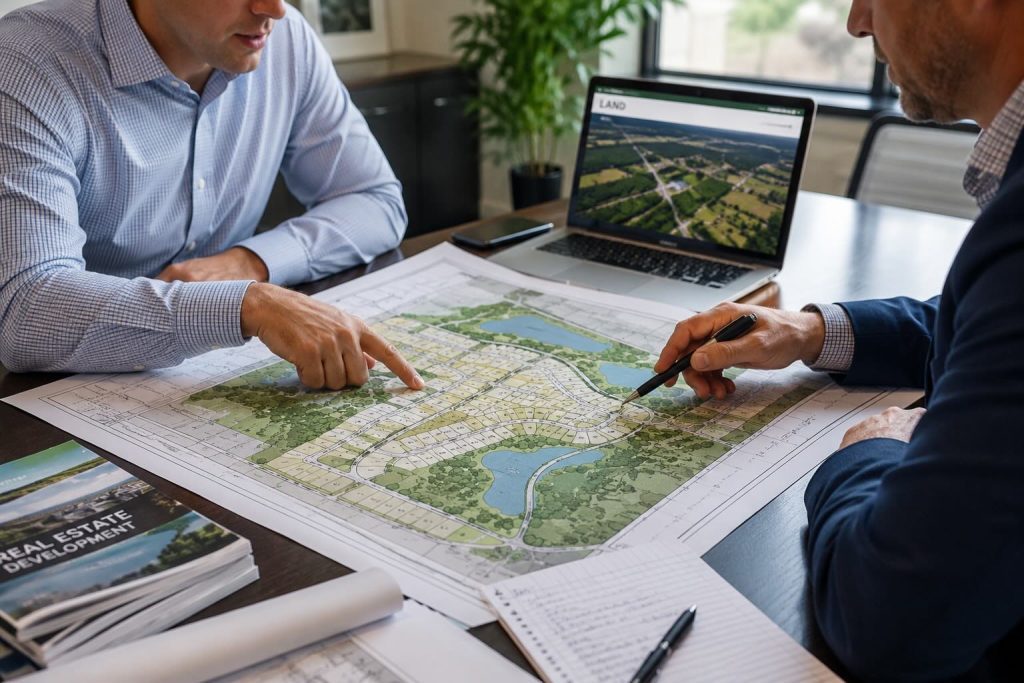
Whether you are a developer trying to quietly assemble a site or a landowner trying to understand an offer you have received, a land broker with experience in assemblage transactions can protect your position. Developers work with experienced brokers to identify and approach landowners. Landowners are best served by having their own representation to evaluate the offer, understand the broader assemblage, and negotiate terms that reflect the actual value of their land.
Eshenbaugh Land Company has been involved in assemblage transactions across Florida’s most active growth corridors, including detailed work in Central Florida’s development corridors. If you are navigating one — on either side — contact our team to discuss.