
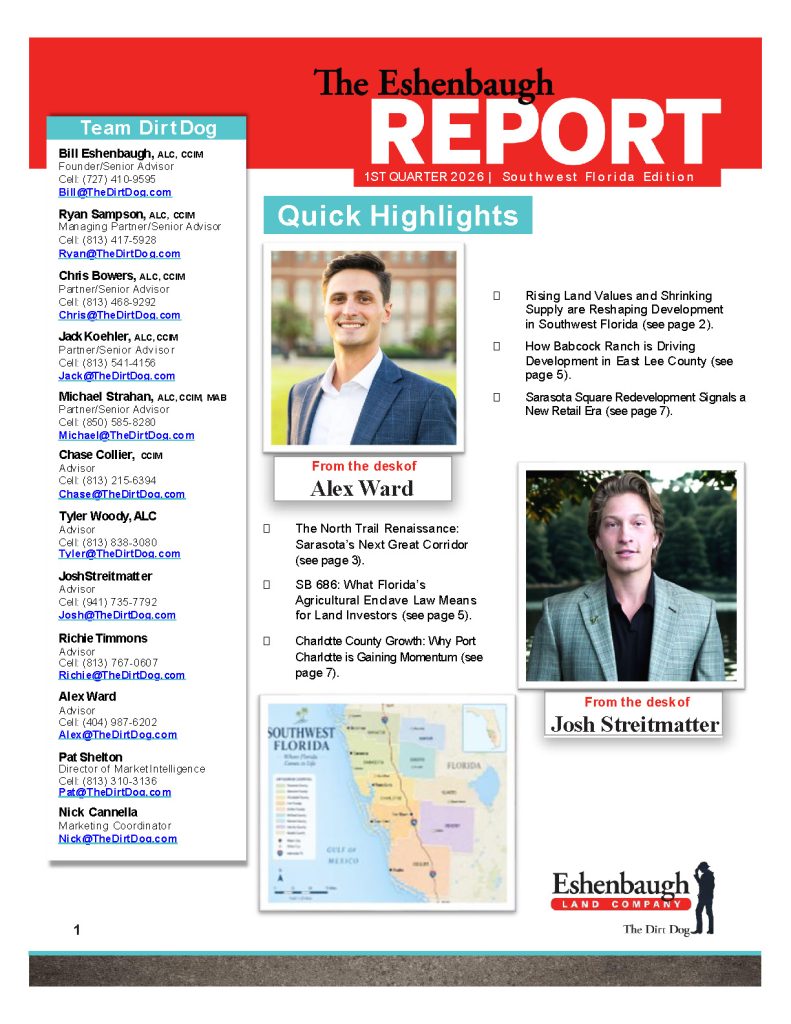
Tampa, FL, May 27th, 2026–Written by Alex Ward and Josh Streitmatter
The Q1 2026 edition of the Southwest Florida Eshenbaugh Report is now available.
This quarter’s report covers six topics shaping the Southwest Florida land market right now. Each one was written from direct market observation — not aggregated data or national headlines.
Below is a summary of what’s inside. The full report is available to download at the bottom of this post.
Rising land values and shrinking supply are reshaping development
Written by Alex Ward.
Buildable land in Southwest Florida is becoming harder to find. The land that remains is commanding prices that would have been difficult to justify a few years ago.
The combination of sustained population growth, limited entitled site inventory, and rising construction costs is pushing developers toward infill and adaptive reuse. Aging retail centers, underperforming commercial properties, and obsolete industrial buildings are now being repositioned as viable alternatives to ground-up development.
Growth is concentrating along specific corridors — the SR-31 area near Babcock Ranch, the expanding edges of Collier County’s urban service area, and select US-41 locations in Sarasota and Charlotte counties. These are some of the last areas where large-scale development remains feasible at reasonable values.
For landowners, the window to unlock value in long-dormant holdings is real — but entitlement risk, environmental review, and impact fee exposure remain significant variables that shape what buyers will pay. Understanding [ANCHOR: how developers evaluate land → /what-developers-look-for-in-florida-land/] before going to market is more important than ever.
The North Trail Renaissance: Sarasota’s next great corridor
Written by Josh Streitmatter.
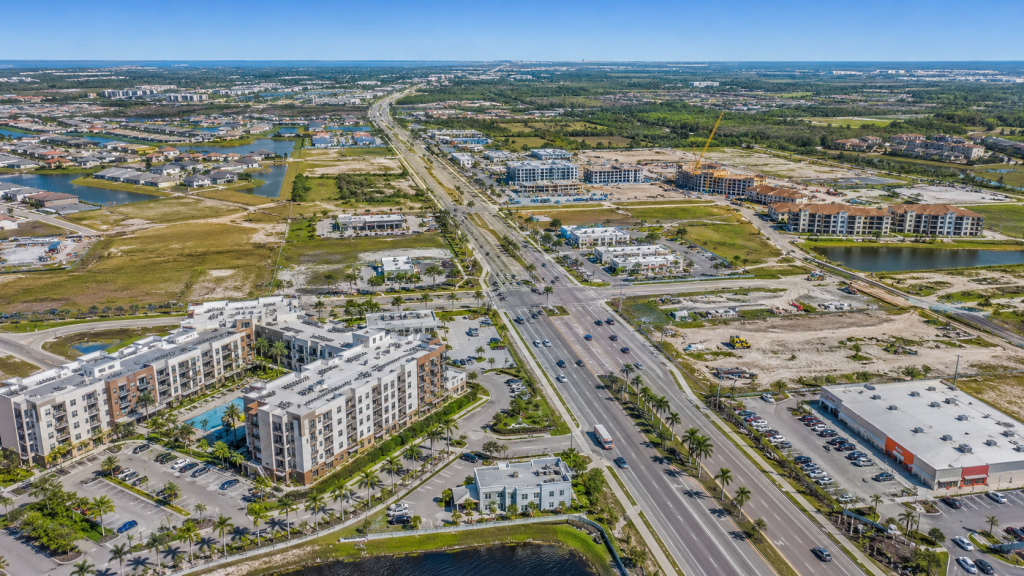
The North Tamiami Trail corridor in Sarasota has carried roughly 40,000 vehicles per day for decades. It has also struggled with blight and unrealized potential for just as long.
That is changing. The North Trail Overlay District (NTOD) is now providing the regulatory framework needed to catalyze mixed-use, pedestrian-friendly redevelopment along this stretch of US-41. The overlay establishes design standards — including building heights up to 45 feet and signage guidelines — that encourage quality investment while protecting adjacent neighborhoods.
Three anchor institutions define this corridor: Ringling College of Art and Design, New College of Florida, and USF Sarasota-Manatee. Together they generate sustained demand for housing, retail, and services that underpins the redevelopment case.
Sarasota-Bradenton International Airport (SRQ) is also a factor. Passenger traffic has grown from roughly 1.18 million travelers in 2017 to an anticipated 4.5 million by the end of 2025. Airport-adjacent land historically attracts hospitality, office, logistics, and supporting commercial demand.
Active projects already in the pipeline include Saravela (281 residential units and ground-floor retail), a proposed 300-unit multifamily development near 17th and 18th Streets, and New Trail Plaza (96 affordable and attainable housing units). The North Trail is no longer a speculative story. The question now is how quickly the transformation arrives.
How Babcock Ranch is driving development in East Lee County
Written by Alex Ward.
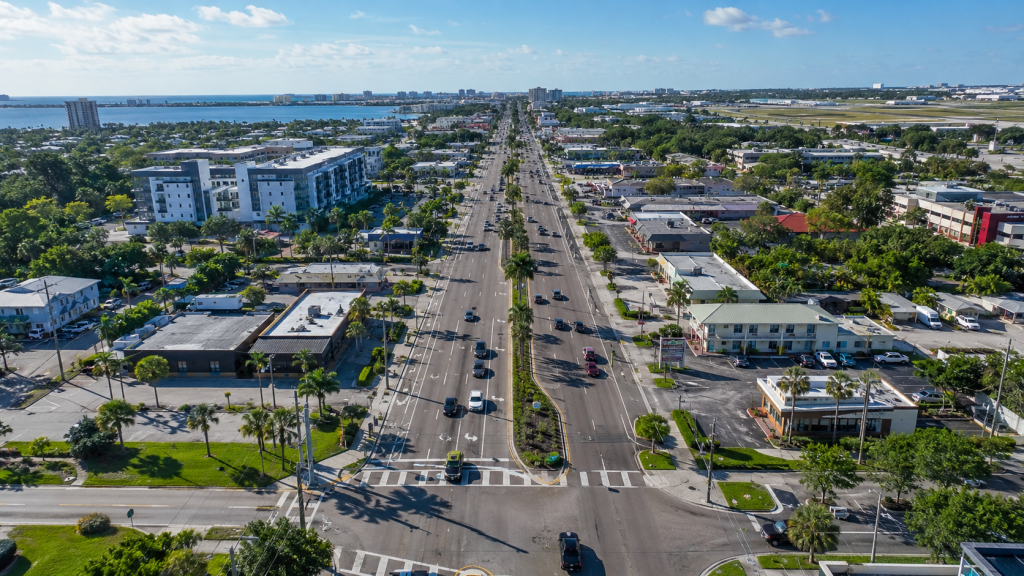
Babcock Ranch has become one of the most influential master-planned communities in Southwest Florida. Located along the SR-31 corridor northeast of Fort Myers, its expansion is driving land activity well beyond the community’s own boundaries.
As residential phases deliver and the population grows, demand is rising for retail, healthcare, restaurants, flex space, and employment centers in surrounding areas. Developers are already evaluating SR-31 corridor sites for exactly those uses.
Infrastructure improvements are helping too. Continued SR-31 enhancements are improving connectivity between Babcock Ranch, Fort Myers, and Lee County employment centers — making land that was previously too remote increasingly viable.
The pattern mirrors what happened around Lakewood Ranch and Wellen Park. Surrounding land values and development momentum accelerated alongside population growth. Babcock Ranch is expected to follow the same trajectory.
SB 686: What Florida’s Agricultural Enclave Law means for land investors
Written by Josh Streitmatter.
In April 2026, Governor Ron DeSantis signed SB 686 into law. Effective July 1, 2026, it creates a faster entitlement path for qualifying agricultural properties surrounded by urban development.
To qualify, a property must be an undeveloped, unincorporated, single-owner agricultural parcel of 1,280 acres or less, largely surrounded by existing development. If surrounding properties already permit similar or greater density, the owner can apply directly to local government for enclave certification. Local governments must issue a report within 30 days and hold a public hearing within another 30 days.
If approved, the project is treated as a conforming use regardless of the existing comprehensive plan or zoning. It cannot face more restrictive standards than comparable nearby development.
There is also an interstate provision. Properties with at least 75% of their perimeter bordered by an interstate and urban service area lands may qualify for commercial and industrial development — opening new repositioning opportunities along I-75, I-4, and I-95.
There are limits. The law does not apply to the Everglades Protection Area, conservation easements, military ranges, or Areas of Critical State Concern. It also includes a sunset provision: the streamlined process expires January 1, 2028 unless the Legislature extends it.
That sunset creates a defined window. Landowners and investors with qualifying properties — especially those near major highways and existing development — should evaluate their options now.
Sarasota Square redevelopment signals a new retail era
Written by Alex Ward.
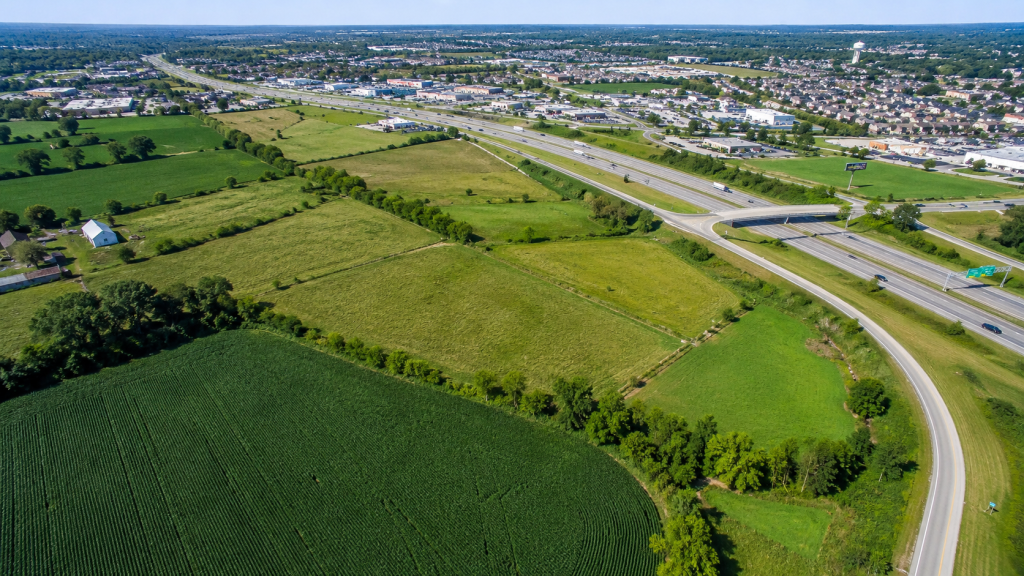
The former Sarasota Square Mall closed in 2024 after nearly five decades as a regional retail anchor. What replaces it says a great deal about where retail development is heading in Southwest Florida.
Chicago-based Torburn Partners is repositioning the 96-acre site into a mixed-use destination with roughly 530,000 square feet of retail, restaurant, and commercial space alongside approximately 1,200 residential units. Early tenants include Whole Foods, HomeSense, Chipotle, CAVA, Joe & The Juice, and Charles Schwab — a mix focused on experiential retail, dining, services, and everyday convenience.
The residential component is not incidental. By integrating housing directly into the development, Torburn creates built-in foot traffic and reduces reliance on outside visitors. This model — transforming obsolete enclosed malls into mixed-use, live-work-play environments — is becoming a national template.
For landowners and developers in Southwest Florida, Sarasota Square is a clear signal. Large infill sites are being repositioned to meet today’s market demands. As Sarasota County continues to grow, projects like this will increasingly define where people live, shop, and gather.

Charlotte County: Why Port Charlotte is gaining momentum
Written by Josh Streitmatter.
Charlotte County is transitioning from an overlooked alternative to one of Southwest Florida’s most compelling growth markets.
While Southwest Florida continues to attract significant population and capital, the growth story in Pasco County on the Tampa Bay side is equally compelling. For a detailed look at what’s driving land demand north of Tampa, see our analysis of Pasco County’s land market growth trajectory.
The population grew from roughly 201,000 in 2023 to more than 224,000 by early 2025 — an unusually rapid increase for a market of its size. Areas like the Burnt Store Road corridor, Westport, and mid-county are seeing the strongest residential expansion.
That growth has created an imbalance. Residential development has outpaced commercial and industrial supply. As more rooftops come online, demand naturally follows for grocery stores, restaurants, healthcare, and employment centers. County leaders have openly identified commercial and industrial development as priorities.
Charlotte County’s access to I-75, US-41, Punta Gorda Airport, and the expanding Enterprise Charlotte Airport Park strengthens the industrial and logistics case considerably. Continued infrastructure investment — wastewater expansion, transportation improvements, airport-related growth — is laying the groundwork for what comes next.
Historically, the strongest land investment opportunities emerge when population growth outpaces supporting development — before pricing fully adjusts. Charlotte County increasingly fits that profile.
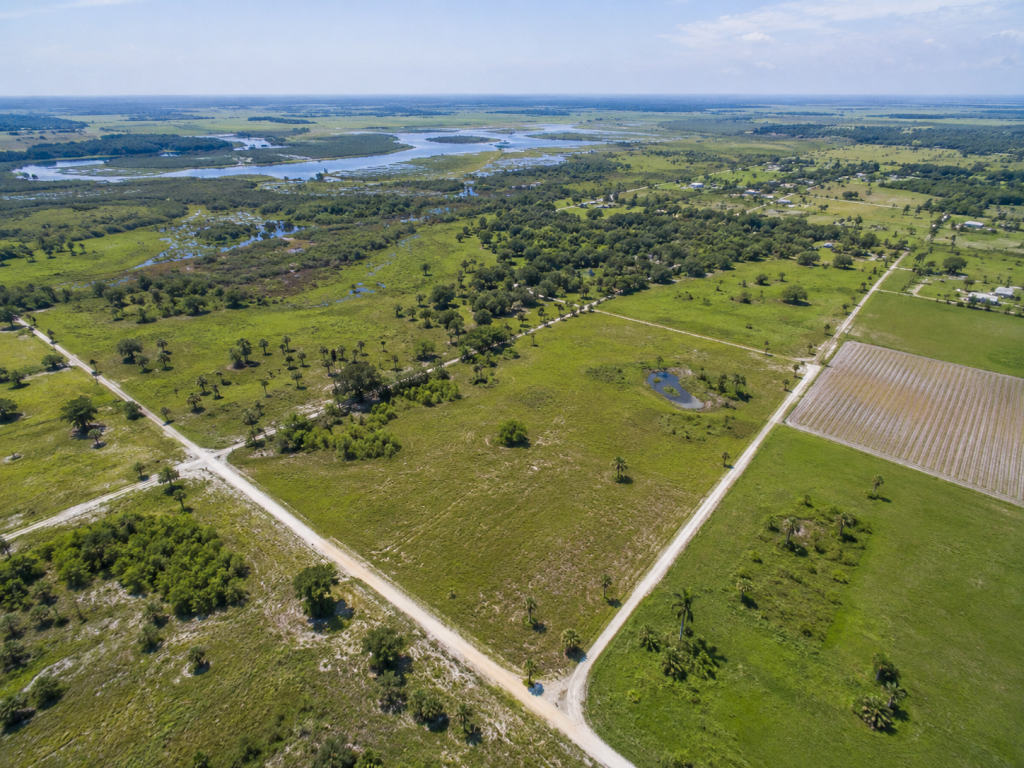
Download the full Q1 2026 Southwest Florida Report
All six articles — plus available commercial, residential, and agricultural land listings across Sarasota, Manatee, Lee, Charlotte, and DeSoto counties — are included in the full report.
For a broader look at deal activity across Tampa Bay, Pasco, Polk, Pinellas, and Sarasota counties, Bill Eshenbaugh’s Around The Marketplace roundup covers the most significant transactions and development signals happening across the region right now.
DeSoto County is one of the standout stories in Southwest Florida’s current growth cycle. Institutional commitments, master-planned communities, and healthcare infrastructure investment are converging in ways that haven’t been seen in Arcadia in decades. For a deeper look, see our full analysis of DeSoto County’s emerging land market.
Browse our Southwest Florida land advisors to connect with Alex Ward, Josh Streitmatter, or any member of the Southwest Florida team directly. You can also view available land listings across the region.