
Tampa, FL, May 18th, 2026–Written by Nick Cannella
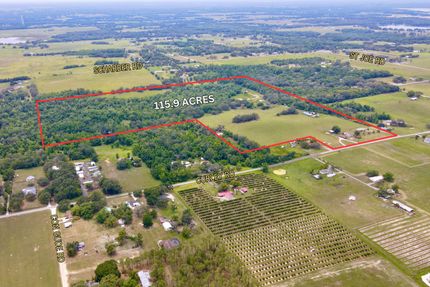
For years, Pasco County has been one of the most active growth stories in the Tampa Bay region.
Eshenbaugh Land Company entered 2026 with immediate momentum in this corridor. The firm launched 2026 with $2.5 million in closings in Lutz and Wesley Chapel, underscoring continued demand for land along the Pasco-Hillsborough growth axis as buyers compete for well-positioned parcels before further price appreciation.
As land in Hillsborough and Pinellas became more expensive, more constrained, and more difficult to assemble, development pressure continued moving north. That shift has brought new residential communities, commercial activity, infrastructure planning, and buyer interest to areas such as Wesley Chapel, Land O’ Lakes, Zephyrhills, Dade City, Odessa, and the broader State Road 54 and State Road 52 corridors.
For Pasco County landowners, this growth raises an important question:
What does it mean for the value and marketability of my land?
The answer depends on location, zoning, future land use, utilities, road access, entitlement potential, and buyer demand. But one thing is clear: Pasco County remains one of the key counties to watch for Florida land activity.
Pasco County has become a major growth market
Pasco County is no longer simply viewed as an outlying bedroom community north of Tampa.
Pasco County’s growth story isn’t only about residential sprawl and new corridors—it also includes meaningful civic investment in its existing town centers. The historic Pasco Town Center project groundbreaking marked a significant milestone for the county, signaling commitment to walkable, mixed-use revitalization alongside the broader development boom happening across the region.
The county has seen meaningful population growth, expanding residential development, new commercial nodes, and continued infrastructure investment. According to the U.S. Census Bureau, Pasco County’s estimated population reached 659,114 as of July 1, 2024, up from 561,891 in the 2020 Census.
Pasco County’s entitlement activity spans a wide range of asset types beyond traditional residential. Chase Collier brokered a $1.72 million sale of an entitled ALF site in Trinity—a transaction that highlights the depth of specialty use demand in Pasco and the complexity of deals that require brokers with specific knowledge of entitlement-sensitive property types.
That growth matters for landowners because population growth typically increases demand for housing, retail, schools, medical services, employment centers, infrastructure, and future development sites.
Pasco County has been the site of some of the region’s most significant land transactions in recent years. Among them: Bill Eshenbaugh and Jack Koehler earned the CCIM Deal of the Quarter for their $12.1 million Del Webb River Reserve land sale—a landmark Pasco County transaction that drew industry-wide recognition for its complexity and scale.
The Pasco County land market’s appeal to serious investors has been validated at the highest levels of the commercial real estate industry. Bill Eshenbaugh won NAIOP’s Land Deal of the Year award for a landmark Pasco County sale—industry recognition that confirms both the significance of the transaction and the depth of expertise behind it.
As more people move into the county, developers and investors look for land that can support the next phase of growth.
Growth is following major corridors
In Pasco County, land demand is closely tied to transportation corridors.
State Road 54, State Road 56, State Road 52, U.S. 41, U.S. 301, I-75, and the Suncoast Parkway all influence how developers evaluate land. These corridors affect access, visibility, commute patterns, commercial viability, and the timing of future development.
The State Road 54 corridor remains especially important because of its connection between established growth areas, major residential communities, and employment destinations. FDOT lists multiple current projects along SR 54, including paving, median improvements, a pedestrian overpass for the Suncoast Trail, and a US 41 at SR 54 Project Development and Environment Study.
Major land transactions continue to close across Pasco County’s established communities. Jack Koehler and Bill Eshenbaugh closed a $10.68 million sale in Land O’ Lakes—a landmark transaction in one of Pasco’s most active submarkets, where strong demographics and proximity to Tampa continue to drive significant land demand.
Transportation improvements do not automatically increase the value of every nearby parcel, but they often influence where buyers focus their attention. Land with strong access, road frontage, utility potential, and supportive land use can become more attractive as corridors mature.
Wesley Chapel remains one of Pasco’s most recognized growth areas
Wesley Chapel has become one of the best known examples of Pasco County’s transformation.
The area has drawn significant residential, commercial, medical, retail, and mixed use activity over the past several years. Its location near I-75, SR 54, SR 56, Wiregrass Ranch, and other major growth anchors has made it a focal point for developers and investors.
For landowners, this matters because buyer demand often expands outward from proven development nodes. Once an area demonstrates strong absorption, infrastructure investment, and consumer demand, buyers may begin looking at nearby sites that could support the next phase of development.
However, proximity to growth is only one part of the equation. A property still needs realistic access, utility service, entitlement potential, and a feasible site plan.
Land O’ Lakes and Odessa continue to attract attention
Recognition at the CCIM level reflects not just deal volume but the complexity and quality of the transactions involved. Jack Koehler and Bill Eshenbaugh’s CCIM Deal of the Quarter win spotlights a standout transaction that earned peer recognition from one of commercial real estate’s most credentialed professional organizations—further evidence of the firm’s consistent performance on high-stakes deals.
The Eshenbaugh team’s reach extends well beyond Pasco County into Hillsborough and the broader Tampa Bay market. Tyler Woody and Ryan Sampson’s $2.2 million closing in Hillsborough County is a strong example of two-broker collaboration delivering results for clients—a transaction that highlights the firm’s ability to work across county lines and close deals efficiently in highly competitive submarkets.
Tampa Bay’s northward growth story doesn’t exist in isolation—it’s part of a broader Tampa land market story that continues to evolve. The Tampa land market outlook for 2026 takes a close look at what’s driving buyer demand, where development pressure is building, and what landowners across the Tampa Bay region should understand about market conditions heading into the year ahead.
Looking back at how Florida land markets have shifted over the past few years offers useful context for understanding where things stand today. The 3rd Quarter 2022 Florida Land Market Report from Eshenbaugh Land Company captures a pivotal period when rising interest rates began reshaping buyer behavior—a useful benchmark for comparing current market dynamics against recent history.
Understanding how North Tampa Bay land fits within the broader Florida market requires reliable statewide benchmarks each quarter. Eshenbaugh Land Company’s Q3 market report provides that context—covering deal pace, pricing trends, and buyer activity across the state’s land corridors through the summer months and offering landowners a reliable read on where Florida’s market stood heading into the final stretch of the year.
Pasco County’s growth story sits within a larger statewide land market that mid-year reporting helps put in context. Eshenbaugh Land Company’s Q2 2024 market report provides that statewide benchmark—covering transaction volume, pricing signals, and buyer demand patterns across Florida’s land corridors at the midpoint of 2024, useful grounding for North Tampa Bay landowners evaluating their timing and positioning.
Understanding how Pasco County’s growth fits into the statewide picture requires tracking Florida land data at the macro level. Eshenbaugh Land Company’s Q1 2025 report provides that statewide context—covering transaction volume, buyer activity, and pricing signals across Florida’s land markets at the start of the year, giving North Tampa Bay landowners a benchmark for where their market stands relative to the rest of the state.
For landowners and developers tracking how Pasco County fits into the broader Florida land picture, quarterly reporting provides the best data-grounded context. The Q4 2024 market report from Eshenbaugh Land Company covers deal flow, pricing signals, and buyer activity across the state to round out the year—useful context for anyone evaluating where North Tampa Bay land fits within the statewide picture heading into 2025.
The Dirt Dogs’ monthly picks offer a curated view into which Florida land opportunities are attracting attention from experienced brokers—a useful shortlist for investors tracking the market. The August edition of the Dirt Dogs’ Pick 3 showcases three properties selected by the Eshenbaugh team for their market positioning, location, or development trajectory—the kind of deal-floor perspective that rarely makes it into broad market reports.
Jack Koehler’s record of major closings across Pasco County reflects both his market knowledge and deal-making ability. The Dirt Dogs interview with Jack Koehler gives a closer look at the broker behind those results—his professional history, his philosophy on land transactions, and what clients can expect when they work with him on complex deals in high-growth Florida markets.
Land O’ Lakes and Odessa are also important pieces of the Pasco County land story.
The Tampa Bay market has produced some of the region’s most notable land transactions in recent memory. Ryan Sampson’s $9.85 million Tampa waterfront sale stands out as a prime example—a closing that reflects both the sustained appetite for waterfront land along the bay and the deal-making capability that Eshenbaugh Land Company brings to premium transactions.
These areas benefit from proximity to Tampa, the Suncoast Parkway, U.S. 41, SR 54, and established residential growth. They are often attractive to buyers looking for development opportunities that still offer access to the broader Tampa Bay market.
For landowners in these submarkets, the key question is often not whether there is growth nearby. The better question is whether the property is positioned to capture that growth.
That depends on factors such as:
- Future land use
- Zoning
- Utility availability
- Road frontage
- Environmental constraints
- Surrounding development patterns
- Buyer demand for the property’s likely use
A property near growth can still face challenges if it lacks access, utilities, or a clear entitlement path.
East Pasco is becoming increasingly important
East Pasco, including Zephyrhills, Dade City, and surrounding areas, has also gained more attention as development pressure continues moving outward.
Compared with the more mature western and central Pasco submarkets, parts of East Pasco may offer larger tracts, different pricing dynamics, and longer term development opportunities. Residential growth, road planning, and regional connectivity all influence how buyers look at this area.
However, East Pasco is not one uniform market. Some sites may be near active growth patterns, while others may still be longer term holds. For landowners, understanding timing is critical.
A property may have future development potential, but if utilities, road capacity, or buyer demand are not yet in place, the market may price that risk accordingly.
The Connected City shows how Pasco is planning for new growth patterns
Pasco County’s Connected City is another example of how the county is thinking about future development.
The county describes Connected City as a new city under development in partnership with Metro Development Group, built around technology, connectivity, and a live, play, work model.
Projects like this can influence landowner expectations because they show how targeted planning areas may attract development interest over time. However, the impact on any individual property depends on whether that property is actually located near the growth area, has compatible land use, and can support development from an infrastructure and entitlement standpoint.
For sellers, the takeaway is simple: being near a major growth area can help, but the details still matter.
Utilities remain one of the biggest value drivers
In Pasco County, utility access can have a major impact on land value.
Properties with water and sewer nearby may appeal to a wider range of developers because they can reduce uncertainty, cost, and timing. Properties without utilities may still have value, but the buyer pool may be more limited depending on the intended use.
A residential builder, commercial developer, or mixed use buyer will typically want to understand:
- Are water and sewer available?
- Is there enough capacity?
- Will extensions be required?
- Who pays for those improvements?
- Are annexation or service agreements needed?
- How does utility access affect density or site design?
A site with strong location but limited utility access may not command the same value as a similar site with infrastructure already nearby.
Entitlements can separate short term opportunities from long term land plays
Not all Pasco County land is ready for immediate development.
Some properties may already have zoning or entitlements that support a clear path forward. Others may require rezoning, comprehensive plan amendments, site plan approvals, environmental permits, traffic studies, or utility agreements.
That distinction matters to buyers.
Deal velocity across the region has been strong, and the Eshenbaugh team’s closings reflect that momentum. Eshenbaugh Land Company’s September closings totaling $21.1 million showcased the team’s ability to execute multiple significant transactions simultaneously—a result of deep market relationships, an experienced broker team, and sustained demand across Florida land categories.
A property with a clearer approval path may receive stronger interest because the buyer can better understand timing and risk. A property that requires significant entitlement work may still be valuable, but the offer structure may reflect that uncertainty through longer due diligence periods, approval contingencies, or phased closing structures.
For sellers, this is one reason a land valuation should consider more than acreage. Entitlement status can materially affect both price and terms.
Road frontage and access are critical in Pasco County
Because Pasco’s growth is corridor driven, road frontage and access matter.
A property along a major corridor may appear valuable, but buyers will still study whether access works. Median cuts, turn lanes, driveway permits, traffic impacts, visibility, and roadway capacity can all influence feasibility.
North Tampa Bay’s growth trajectory doesn’t turn on a dime—it tends to show early indicators before the headline numbers catch up. The first signs of movement in the Florida land market is a useful framework for understanding how to read those early signals, whether the market is accelerating or beginning to cool, before deals reflect the new reality.
For commercial sites, access and visibility can be central to value. For residential sites, access can affect entry design, traffic circulation, emergency access, and approval risk. For industrial or business park uses, truck movement and roadway connectivity may be key.
In a fast growing county, road frontage can be a strength, but it can also come with added review, improvement costs, or right of way considerations.
Buyer demand varies by property type
Pasco County land demand is not limited to one use.
Depending on the location and site characteristics, buyers may be evaluating land for residential communities, townhomes, build to rent, commercial development, medical office, mixed use, industrial, self storage, recreational use, or long term investment.
The strongest buyer pool usually forms when the property’s characteristics align with a realistic use.
For example:
- Residential buyers may focus on density, utilities, schools, absorption, and access.
- Commercial buyers may focus on frontage, traffic, rooftops, visibility, and turning movements.
- Industrial buyers may focus on road connectivity, truck access, site size, utilities, and surrounding compatibility.
- Investors may focus on timing, growth path, basis, and long term land use potential.
Understanding which buyer pool is most likely to pursue a property is essential before setting pricing expectations.
What Pasco County landowners should watch
Landowners in Pasco County should pay attention to several factors that can affect marketability and value:
- Nearby residential and commercial development activity
- Utility extensions and capacity
- Road widening or transportation improvement plans
- Changes to future land use or comprehensive planning
- Environmental constraints and usable acreage
- Buyer activity in the surrounding submarket
- Comparable sales and active listings
- Entitlement timelines and approval risk
- Whether the property is better suited for near term development or long term investment
Pasco County’s growth creates opportunity, but buyers still evaluate land through the lens of feasibility.
Final thoughts
Pasco County remains one of the most important land markets in the Tampa Bay region.
Growth has continued moving north because of population gains, expanding residential communities, major corridors, infrastructure planning, and the search for developable land outside more constrained areas. But not every parcel benefits equally.
For landowners, the key is understanding how a specific property fits into the county’s growth pattern. Location matters, but so do zoning, future land use, utilities, road frontage, entitlements, environmental conditions, and current buyer demand.
Eshenbaugh Land Company works with landowners, developers, builders, and investors across Pasco County and the greater Tampa Bay region to evaluate land opportunities and understand market positioning.
For a broader view of what’s happening across multiple Florida counties simultaneously—from Tampa to Sarasota to Polk—Bill Eshenbaugh’s Around The Marketplace roundup tracks the deals, developments, and market signals worth watching across the region.
Pasco County isn’t the only Florida market seeing this kind of momentum. Further south, DeSoto County is attracting similar attention as growth pressure from the Tampa Bay and Fort Myers corridors converges on Arcadia. Our breakdown of DeSoto County’s emerging growth cycle covers the infrastructure signals and institutional commitments reshaping that market.
For buyers and developers evaluating the market, current available land opportunities can provide helpful context on acreage, pricing, location, frontage, and development potential across Florida.