
Tampa, FL, July 14th, 2026–Written by Bill Eshenbaugh
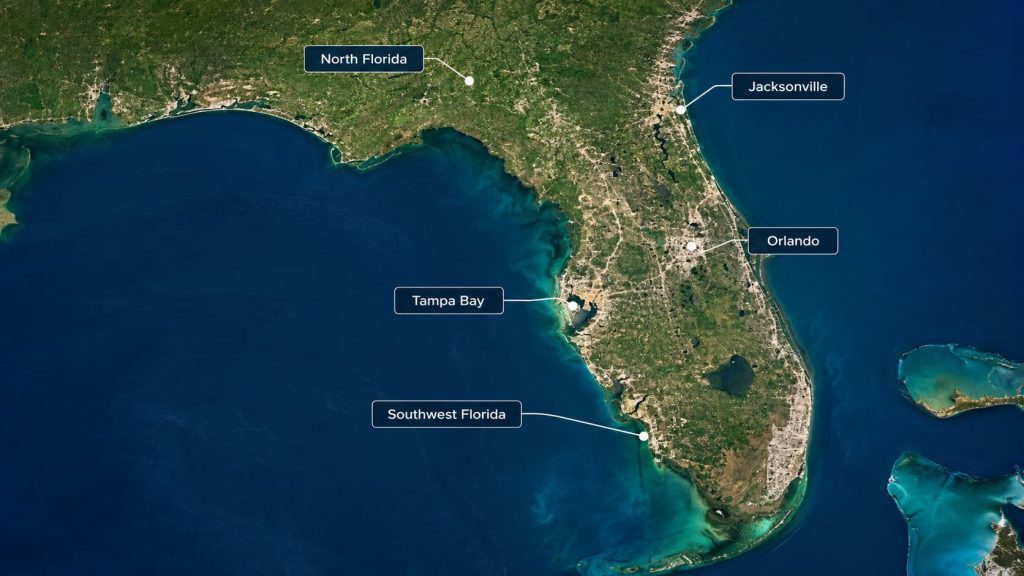
Florida is one of the most active land markets in the United States, but “best” is a loaded word. The best place to buy land in Florida depends entirely on what you’re trying to accomplish — whether that’s a near-term development play, a long-term appreciation hold, an agricultural operation, a lifestyle property, or a commercial investment. Here’s a region-by-region breakdown of where buyers and investors are finding value in 2026, and what’s driving activity in each market.
What “Best” Actually Means for Florida Land Buyers
Before diving into specific regions, it’s worth naming the variables that determine whether a location is “best” for any given buyer. Development potential is the biggest one — a parcel’s value is driven by what can be built on it, which means zoning, entitlements, infrastructure access, and proximity to growth corridors all matter more than raw geography. Beyond development potential, buyers weigh affordability (value per acre relative to comparable markets), demand trajectory (is population and capital moving toward this area or away from it), and exit liquidity (how easy will it be to sell when the time comes).
With that framework in mind, here’s where the opportunities are in 2026.
Tampa Bay and the I-4 Corridor: Florida’s Growth Engine
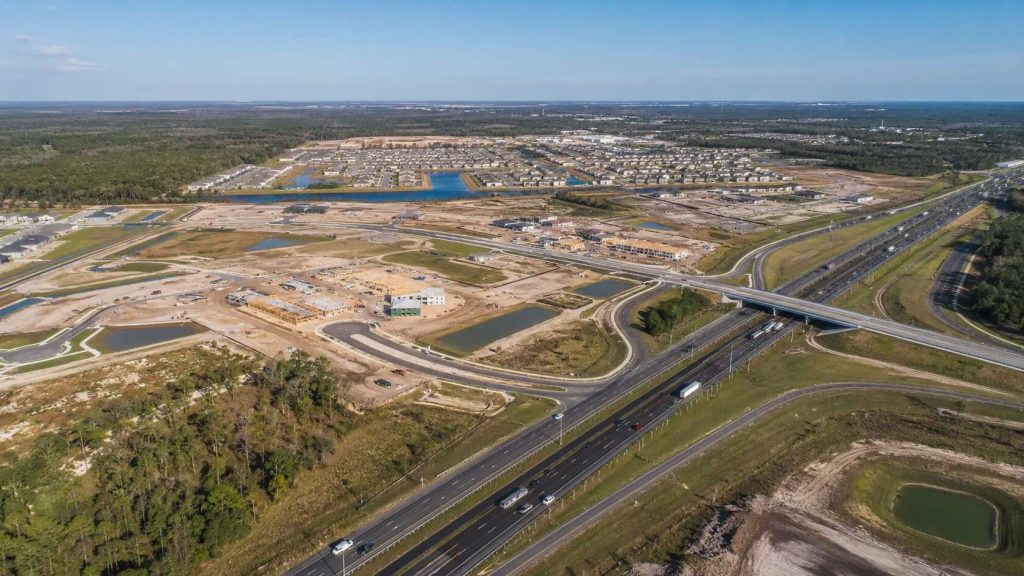
The Tampa Bay metro and the I-4 corridor connecting it to Orlando remain the spine of Florida land activity. Pasco County continues to see some of the strongest residential land demand in the state, driven by its position as the last affordable county with direct access to both Tampa and Orlando employment. Polk County has become one of the most active industrial land markets in the Southeast, with logistics and distribution users competing for large acreage near I-4 interchanges.
Land prices here reflect the demand — this is not a value market, and buyers should enter with realistic development economics. But for buyers who need proximity to Florida’s largest employment and population centers, the I-4 corridor remains the primary focus for a reason.
North Florida: The Value Play
Alachua, Marion, Columbia, and surrounding North Florida counties represent the strongest value-per-acre opportunity in the state right now. Land that would cost $30,000-$70,000 per acre in the Tampa Bay market can often be acquired for $5,000-$20,000 per acre in North Florida, with meaningful infrastructure improvement underway in key corridors.
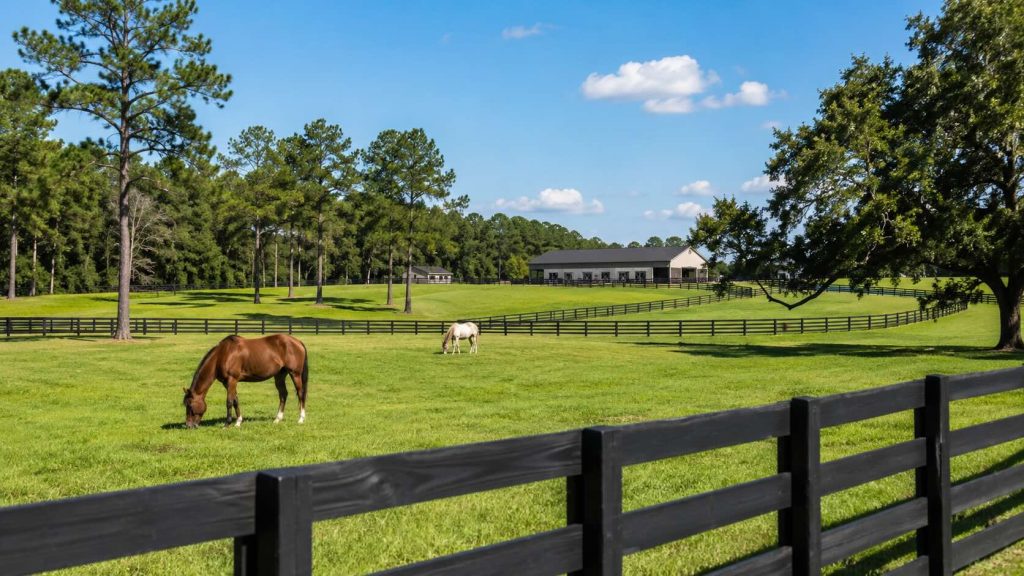
Gainesville anchors the northern market with a university, a growing healthcare sector, and suburban expansion demand. Ocala — situated along I-75 near the Florida Turnpike’s northern terminus — has become a logistics and distribution hub in its own right, and Marion County’s equestrian market remains one of the most established in the Southeast. Search interest in North Florida land has grown dramatically in 2026, reflecting genuine buyer activity rather than just curiosity.
Southwest Florida: Premium Prices, Strong Demand
Sarasota, Charlotte, and Lee counties continue to attract buyers drawn by the region’s lifestyle, climate, and Gulf Coast amenity. Prices are among the highest outside of South Florida, and the Gulf Coast corridor has seen more volatility than other regions following back-to-back hurricane seasons. That said, demand from both domestic and international buyers remains resilient, and well-located commercial and residential land still commands strong pricing.
Buyers entering Southwest Florida in 2026 should do thorough environmental and insurance diligence. Flood zone designation, elevation certificates, and proximity to coastal hazard areas affect both development costs and long-term value in ways that don’t apply in inland markets.
Northeast Florida: Jacksonville’s Expanding Ring
Clay, St. Johns, and Nassau counties — the suburban ring surrounding Jacksonville to the south, west, and north — represent one of the more consistent land investment stories in Florida over the past decade. St. Johns County has become one of the fastest-growing counties in the country by percentage, driven by high-quality school districts and relative affordability compared to South Florida. Clay County offers access to Jacksonville employment with pricing that still makes residential development pencil for many buyers.
The Jacksonville port expansion and continued growth in the region’s defense and financial services employment base support long-term demand for both residential and industrial land.
Central Florida: High Demand, Evolving Submarkets
The Orlando metro and its surrounding counties remain one of the most competitive land markets in Florida. Osceola County’s Wellness Way corridor, Polk County’s I-4 frontage, and the suburban fringe of Lake and Seminole counties are all seeing active development pressure. With billions in development projects announced or underway across the Orlando metro, demand for well-positioned land is running ahead of available supply in core submarkets.
The Bottom Line
There is no single “best” place to buy land in Florida in 2026 — but there are clearly better fits depending on your budget, timeline, and goals. North Florida offers the strongest value proposition for buyers prioritizing affordability and long-term upside. The I-4 corridor offers the highest liquidity and strongest near-term demand but requires more capital. The coasts offer a lifestyle premium, though at a higher price point.
Eshenbaugh Land Company transacts across Florida’s most active markets. If you want help identifying where your capital and goals are best matched in today’s market, contact our team or browse our current land listings.