
Tampa, FL, September 28th, 2026–Written by Nick Cannella
Note: This is general educational information, not tax, legal, or voting advice. Eshenbaugh Land Company does not endorse any candidate or ballot position. Confirm details with official sources and a qualified professional.
The Florida property tax debate reaches a turning point this November: voters will decide a constitutional amendment that could begin phasing out property taxes on homesteaded primary residences. For landowners, the most important thing to understand is what the measure does — and, just as important, what it does not touch.
This is one of the most consequential tax questions Florida has faced in years, and it has generated strong arguments on both sides. Our goal here is not to tell you how to vote. It is to lay out the facts, the pros and cons each side is making, and what the outcome would — and would not — mean for land.
What the Florida property tax amendment actually does
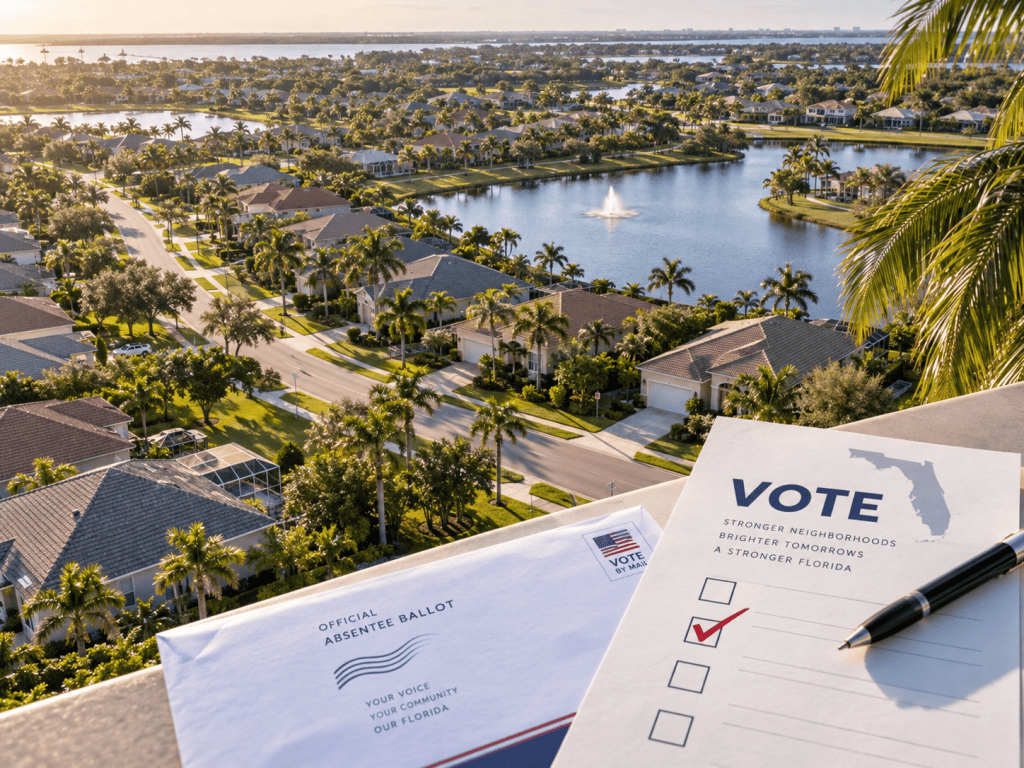
In a June 2026 special session, the Florida Legislature passed CS/HJR 1-F, placing a property tax constitutional amendment on the November 3, 2026 ballot. To take effect, it must be approved by at least 60% of voters.
As passed, the measure would increase the homestead exemption in steps — and create a pathway for a future Legislature to establish a schedule for eliminating non-school property taxes on homesteaded primary residences. If approved, most provisions would take effect January 1, 2027.
One point is essential for this audience, and it is easy to miss in the headlines.
The amendment applies only to homesteaded primary residences — the full-time homes of Florida residents. It does not apply to investment land, commercial property, second homes, short-term rentals, or agricultural land. Vacant land and most of what a land investor or developer owns would continue to be taxed as it is today.
The case for eliminating property taxes
Supporters of the amendment make several arguments.
- Rising bills: Homeowners have watched tax bills climb as property values surged, and relief is overdue. Supporters note that local property tax revenue has grown sharply in recent years.
- Ownership principle: Proponents argue that a permanent home should not carry an ongoing tax that can rise indefinitely — a point the Governor has framed as homeowners no longer “paying rent to the government” on land they own.
- Affordability & growth: Lower carrying costs on a primary residence can make homeownership more affordable and attractive, supporting Florida’s continued population growth.
The case against — and the concerns raised
Opponents and fiscal analysts raise significant concerns.
- Local funding: Property taxes fund local services — public safety, schools, infrastructure, and more. A House staff analysis estimated the measure could reduce revenue to non-school local governments by roughly $4.6 billion in the first year, growing to about $8.4 billion annually.
- No replacement plan: Critics note the amendment does not specify how lost revenue would be replaced, raising the prospect of higher sales taxes or other levies to fill the gap.
- Tax-structure effects: Analysts warn that shifting away from property tax toward narrower revenue sources could make Florida’s overall tax structure less efficient and shift burdens in uneven ways.
Both sides are making good-faith arguments about real trade-offs. Reasonable people disagree, which is exactly why the question is going to voters.
What it means for land investors and owners
Here is the practical takeaway for anyone who owns land as an investment rather than a homestead: this amendment, as written, would not directly change your property tax situation.
Vacant land, development sites, commercial parcels, and agricultural land are outside the homestead-focused measure. If you own those, your property taxes would continue under existing rules — including tools like agricultural classification under Florida’s Greenbelt Law, which remains the primary property-tax mechanism relevant to working land.
That said, the broader picture matters. A significant shift in how local governments are funded could, over time, influence infrastructure spending, impact fees, and growth policy — all of which affect land values indirectly. Whatever the outcome, it is worth understanding how much your land is worth today; see how much is my land worth in Florida.
The bottom line
The Florida property tax amendment on the November 2026 ballot is a genuinely important decision, with real arguments on both sides and real fiscal trade-offs either way.
For homeowners, it could mean meaningful relief on a primary residence. For land investors and owners of commercial or agricultural property, the direct effect is limited — but the second-order effects on local funding and growth policy are worth watching. As always, we encourage you to review official sources, weigh both sides, and make your own decision. Our land advisory team is here to help you understand how tax and market factors affect your specific property, whatever voters decide. You can also view available land listings.
Questions about how taxes and market conditions affect your land? Contact Eshenbaugh Land Company for a confidential conversation.